Radio Luxembourg: The Station that Changed Our Lives, Episode #3

Audience

Airdate: March 17, 2026
24:54
Hosted by Caroline & Zhuojia

Dr Dominique Santana

Selling happiness, shaping minds – a Radio Luxembourg story. The student podcast series from the University of Luxembourg.


Prof. Andreas Fickers

A series about the power of radio, DJ culture, seductive ads, global audiences and the thin line between information and propaganda.


Archive

Dutch listener: Mijn favorite radio station is Radio Luxemburg, het station van der sterren.

French listener: La radio que je préfère c’est Radio Luxembourg, la radio des stars.

German listener: Meine Lieblingsstation ist Radio Luxembourg, die Station der Stars.

English listener: My favourite station is Radio Luxembourg, the Station of the Stars.


Caroline

This podcast is about how Radio Luxembourg, especially its hugely successful English-language broadcast division, built a unique and lasting connection with its audience, becoming one of the most popular and well-loved stations for generations of young people around the world. 

Radio Luxembourg, a station that talked, rocked and rollicked, captivated listeners, leaving not only an enduring legacy but many special memories and moments for its millions of fans worldwide.


Zhuojia

In this episode we take a closer look at the people who listened to Radio Luxembourg and what made them keep tuning in. We want to find out about Radio Luxembourg’s winning formula – how the station managed to keep so close to its audience over the decades!


Caroline

Radio Luxembourg had a magnetic attraction – it was popular in Britain, across Europe and even as far afield as Australia and the United States. It had very powerful transmitters – long wave in the early years, followed by medium wave and then FM.

Being the best in terms of broadcasting power and global popularity sometimes meant challenging international broadcasting rules and norms. This, together with the memorable voices of the DJs, gave the station its defining personality: it was wild and rebellious, flamboyant, modern, star-laden and always glamorous – an identity which drew and captivated its audience, who saw in it something of themselves.


Zhuojia

The story of Radio Luxembourg is vast; there is so much more to tell. Dear listeners, if you are interested in learning more, make sure you tune into the full podcast series to hear the other four shows, which focus on the Radio Luxembourg DJs, the power of the station, the war years and propaganda, and how the Radio Luxembourg jingles were used to both sell products and grow audiences.


Jingle

Juicy Fruit adds to your fun. It’s a hit with everyone. Find fruit flavour, want a treat? Make your mouth feel fresh and sweet. Juicy Fruit adds to your fun. Juicy Fruit chewing gum.


Caroline

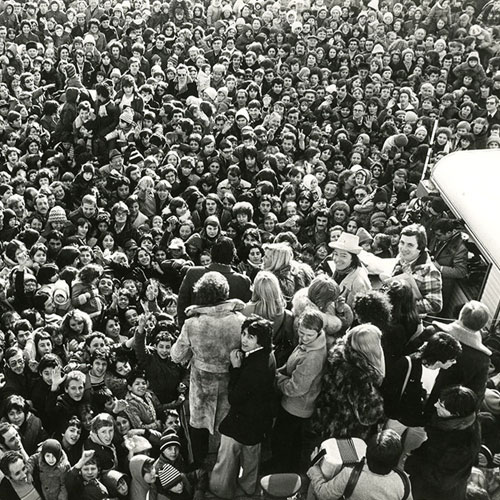
As it was a commercial station, Radio Luxembourg focused on building its audience and connecting with listeners on a personal level. They were encouraged to write in and even to come and visit the station in person.  

The first Radio Luxembourg travelling fans began coming to Luxembourg shortly after its English service opened in 1933. Small tour groups would visit Villa Louvigny, the headquarters of Radio Luxembourg, set in a park in Luxembourg City. The Luxembourg Listener, a small aircraft owned by the station, flew twice weekly from Croydon, near London, to Esch-sur-Alzette in Luxembourg, bringing the precious UK studio recordings along with early fans of the station.

Why was Radio Luxembourg so popular in Britain? One reason is the somewhat paternalistic approach of the BBC, which sought to inform and educate their audience rather than entertaining it. So young British listeners began to tune in in ever increasing numbers to hear the latest hits and rock ’n’ roll music being broadcast by commercial competitors such as Radio Normandy and Radio Luxembourg.

In 1933 Stephen Williams, Radio Luxembourg’s first English radio presenter, arrived in Luxembourg from the UK. From later recordings he looks back to this time and the station’s early success.


Archive

An independent survey showed our listening figures at weekends to be at least 20 times greater than the BBC’s figures – which of course made us even more popular at Broadcasting House. From the Luxembourg Radio Company’s standpoint, they were doing far better than they’d ever expected, better in the English programmes than in all their other language broadcasts put together.


Caroline

From the very beginning, Radio Luxembourg sought to actively forge an intimate connection with its listeners, using print media to reach out to its audience, experimenting and deftly adapting to technological and cultural changes. The DJs deliberately avoided using scripts, giving the station its spontaneous edge and voice and strengthening its identity and brand.


Archive

Pete Murray: When I first went to Radio Luxembourg… They were very happy days, and I’m always grateful to Geoffrey Everitt, who was the other disc jockey there at the time. When I first went in it was always… they accepted things, certainly at the BBC, and it wasn’t… at the BBC until about six years ago they had a script for a record programme, and I thought “Well, I’ll never be able to ad-lib”, and Geoffrey Everitt said to me, “If you don’t ad-lib now, if you work with a script now, you will never be able to ad-lib and that way you will never be a broadcaster”, and I think that was the soundest piece of advice I was ever given. He said “You’ll make a lot of mistakes, and you’ll go on making those mistakes, but at least… And I’d like to think that I was reasonably human. I was very human, if it was talking in terms of mistakes, as I made plenty! But I really enjoyed it…”


Caroline

In the studio, the microphone became the most powerful tool for creating a personal relationship between the presenters and listeners: they held it close and whispered late into the night in a soft, smooth voice, addressing the mass of unknown listeners as if they knew them personally and creating a lasting bond with audiences across the globe.


Jingle

Your request records will always play, if you drop a note to us and do it right away. Give the tune on the label and your favourite star, tune into 208 my friends and there you are.


Zhuojia

Independent newspapers like the Sunday Referee and popular radio magazines like Radio Pictorial were instrumental in helping build Radio Luxembourg’s audience throughout Britain. The weekly programme listings were published for a ready-made British radio-loving audience, together with interviews, pictures of top presenters and technical advice from listeners about how best to tune your radio to get a clear signal from Luxembourg.

Radio Luxembourg also promoted Luxembourg as a great place to come and visit while touring the Villa Louvigny studios and meeting the voices behind the microphone.


Caroline

A 1938 survey carried out by Radio Luxembourg advertisers found that out of a total audience of 8 million UK radio listeners, Radio Luxembourg drew over half – around 4 million every Sunday. It had overtaken rivals like Radio Normandy, and even the national public broadcaster the BBC. The cost of advertising on Radio Luxembourg was higher than anywhere else in the world, reflecting its position as the number one station in Europe!  


Archive material in Spanish, Italian and Portuguese


Zhuojia

Radio Luxembourg placed great emphasis on its identity as a multilingual European station. It promoted its European outlook and diversity by broadcasting in French, German, English and Luxembourgish. Some of its programmes were also broadcast in Flemish, Italian and Spanish.     

When one service came to the end of its daily broadcasts, listeners were encouraged to turn the dial and tune into its sister services in other languages.   

As the different language services had their studios in the long corridor of the Villa Louvigny headquarters, the various presenters regularly promoted each other’s programmes, suggesting to listeners that if they tuned in they could also learn a foreign language! Many letters from fans tell how they learned English not from school but from listening to “208” – the Radio Luxembourg English service! 


Jingle

Now a number called “Tune in”. Hallo Hallo, meine Damen und Herren. Jacques Penn spielt nun “Tune in”. Mesdames, Messieurs. Voici Jacques Penn et son orchestre jouant pour vous “Tune in”.


Caroline

After the war years, millions of children tuned into the Ovaltineys show. The Ovaltineys Club was part of a hugely successful advertising campaign promoting the sale of the Ovaltine drink brand in the UK. Many children who joined the club went on to become lifelong fans, tuning into Radio Luxembourg over the decades as it changed formats, presenters, DJs and programmes.


Archive

Stephen Williams: Ovaltine obviously stands out a mile, but they weren’t the first. The very first of the big-name commercial broadcasters was Palmolive. Ovaltine I think was the next big one to come, Horlicks of course had an hour’s programme every Sunday, the Horlicks Tea Time Hour, the Gaumont-British Picture Corporation had an hour’s Film Fans programme…


Caroline

This winning Radio Luxembourg formula – a blend of light entertainment, catchy commercials, intimate personal chat and popular music – carried through to the later years.

Yet the 50s and 60s were also a time of intense competition for the airwaves. For example, Europe 1 was the main rival for the French-speaking market. This meant that each station needed to come up with new and exciting ways to keep its audiences. Geoffrey Everitt, who ran the English service, introduced the idea of the Top 20 show, which kept the audience tuning in weekly. It became one of longest-running and most popular programmes in the history of Radio Luxembourg. As a cultural ambassador of popular music, Radio Luxembourg played a key role in driving a cultural revolution among young people worldwide.


Archive

I am thinking back, in a moment of joy. I listened to Radio Luxembourg from the 50s, nightly me and my parents and siblings would sit around the radio, listening to our favourite programmes, like Dan Dare: Pilot of the Future, we had Perry Mason, the Top 20 with Pete Murray, featuring Bill Haley, Vera Lynn, Bing Crosby, Chuck Berry, etc. This was all battery radio, of course. We had to make sure the battery didn’t run out, we had to… one had to cycle to the local town to get it charged up, that was a big chore every week.

Jingle

This is Radio Luxembourg, the great 208. The ring-a-ding-a-swinging Station of the Stars.


Zhuojia

With the arrival of television in the 1950s, radio faced serious competition in the mass media market. Television offered a new window onto the world, and radio had to reinvent itself to remain attractive. The emergence of the transistor radio gave rise to new listening habits and lifestyles, making the radio mobile and listening a more individual experience – a precursor to today’s smartphone generation, though with the major difference that we can now stream and listen to audio content like podcasts when we want, whereas listeners in the 1950s and 60s had no choice but to follow broadcasting schedules. 

Radios were no longer a large piece of furniture standing in the living room – they were now portable, entering bedrooms, gardens and public spaces.  


Jingle

In the bath or in a car, in the kitchen or in a car, you’ll find the great 208, the rock and rolling swinging Station of the Stars.


Zhuojia

In the evenings, Radio Luxembourg found a new audience in people working night shifts. The station accompanied them through those lonely hours, encouraging them to write and call in.

The French and German services offered traffic information, and the French service had a dedicated programme for long-haul drivers known as “Les routiers sont sympa”. Drivers would phone in to share road conditions, send greetings and experience companionship on their long journeys. The German service also pioneered a night programme called “Hallo Nachtarbeiter”, aimed at entertaining people working on night shifts.  


Archive

It’s midnight in central Europe.

Live und in Farbe aus dem Studio 4 hören sie die Sendung “Hallo, Nachtarbeiter”.

Here’s Axel.


Zhuojia

For those having to work in the evening, Radio Luxembourg was not only about entertainment; it was about connection, comfort and being part of a community of like-minded listeners.

By 1954, Radio Luxembourg was hugely popular throughout Europe, with 16 million listeners in France and Belgium, where radio dramas such as “La Famille Duraton” were hugely popular.


Caroline

One of the biggest threats to Radio Luxembourg’s popularity came in 1955 with the launch of a hugely ambitious competitor in France named “Europe No. 1” (soon renamed “Europe 1”), headed up by the former boss of advertising at Radio Luxembourg. The rivalry between the stations became legendary and turned into a constant battle for greater reach and wider audiences, which was also reflected in new and innovative formats for audience interaction and marketing initiatives to promote customer loyalty.

Although radio audiences fell briefly with the arrival of television, this did not last long. An audience survey for Radio Luxembourg in 1965 found that average evening listening numbers were about 6 million. The station was most popular with young people, and following the launch of the cassette recorder, many teenagers would record their favourite songs from the radio to create their own mix tapes. 


Zhuojia

During the 60s, Radio Luxembourg faced another challenge with the growing popularity of so-called “pirate stations” – such as the hugely popular “Radio Caroline” – operating off the coast of the UK. With a clear signal that allowed listeners to tune in easily and endless hours of rock and pop music served up by a bunch of unconventional but hugely entertaining DJs, pirate stations successfully competed for audience, sponsors and revenue. The stations were commercially savvy and targeted the newly emerging “teeny bopper” market. Radio Luxembourg rebranded its UK service as “208 – The Station of the Stars” and launched in 1966 its own fan magazine, Fabulous 208, later shortened to Fab 208.


Jingle

Fabulous. Fabulous. Fabulous 208.


Caroline

Teenage fans loved 208 – it was modern and edgy, with all the latest news from the music and fashion worlds, and it forged a strong and lasting connection between the station’s legendary DJs and its young listeners.


Zhuojia

We can imagine a typical fan from that golden era: Downstairs in the living room would be the Decca records; in the kitchen you would find the drinks and snacks promoted between the hit songs. Upstairs in the bathroom, the perfume and shampoo advertised during last week’s show would be lined up on the shelf. There would be a pile of Fabulous 208 magazines by the pillow, alongside that treasured possession, the transistor radio which the fan listened to late at night, under the bedclothes, searching for the signal which faded in and out, then suddenly hitting the jackpot as they heard the familiar voice announcing the hits of the week: the Top 20!  


Archive

The Top 20. And this is your DJ BA Barry Alldis bidding you welcome you to the show. First Help! The Beatles’ new single straight in at number 1. Help! I need somebody. Help!…


Zhuojia

Knowing what music was in the charts and knowing the weekly Top 20 records was a way to connect with your peers. You were in the know musically and you were with the times – you had unlocked the code. 


Caroline

Radio Luxembourg was one of the first stations to play the Beatles. It even aired some interviews, such as an unforgettable moment from the German service where the Beatles themselves were reading letters from listeners live on air.   


Archive

The best record the Beatles have ever made is A Hard Day’s Night because of the fab playing at the end of the record by George. Wow, thanks, and it’s from Linda Darbeat… no, that’s the song! A Hard Day’s Night, let’s play it.


Caroline

That was what Radio Luxembourg did for its millions of listeners around the world – it gave them a voice, a chance to be heard, no matter where they lived.

The DJs encouraged the use of the nickname “Luxy” for the station. Radio Luxembourg took on its own character, Luxy, a rebel with a big personality and a revolutionary spirit. The nickname was widely adopted and used affectionately by fans. The community of listeners felt special because they were part of the Radio Luxembourg tribe – being a listener of Radio Luxembourg was a rebellious gesture for many. Good vibrations were in the air!  


Zhuojia

When the British authorities finally put an end to the pirate radio stations, many of the popular DJs went to join the BBC’s new popular music station Radio 1, which launched in 1967. Some, however, joined Radio Luxembourg, becoming international stars and household names worldwide.  

Faced with the competition from Radio 1 and sensing the cultural shift in the air with a highly energised, politicised youth who were looking for outlets to express themselves, Radio Luxembourg went back to what they knew worked – connecting to their fan base through live DJ roadshows.

They also changed format from pre-recorded shows to live shows with commercial breaks. This marked the start of a new radio format which has stuck to this day!


Jingle

From north to south, from east to west, the folks who want the best listen to Luxembourg, the great 208, the ring-a-ding swinging Station of the Stars.


Caroline

Once again, their magnetic formula worked. Radio Luxembourg was the top station, known widely as the Station of the Stars.

The close-knit community of DJs – Barry Alldis, Mark Wesley, Tony Prince and Benny Brown – were by now meeting and interviewing the top stars of the day: Elvis, the Beatles, Queen. At the same time they were meeting thousands of fans as they toured Europe, even crossing the Iron Curtain, opening a window to the West for the millions of young people in Eastern Europe during the Cold War.


Zhuojia

Radio Luxembourg left a lasting impact on global popular culture throughout the 60s, 70s and 80s – music, fashion and even politics.

Unlike radio stations such as “Radio Free Europe” and “Voice of America”, whose signals were jammed in the Eastern bloc, Radio Luxembourg was considered apolitical – it was just about entertainment – so its signal got through. 


Jingle

There’s a whole lot of rocking and rolling on 208, that’s colourful radio, Luxembourg.


Caroline

Testimonials from the 2012 exhibition “Remembering Radio Luxembourg in the People’s Republic of Poland” recount how precious Radio Luxembourg was during those dark days, and the huge impact it had on young people, giving them hope for a better future. Some recall how difficult it was to get hold of pop records. One fan said that getting hold of a Beatles record would have made you popular with your peers, giving you access to all the best parties. Whilst some did dance to the Radio Luxembourg Top 20, many sat alone late into the night, quietly listening under the covers. Radio Luxembourg brought colour into the lives of those living through the grey days of communism.


Jingle

Midnight, midnight memories, Radio Luxembourg.


Zhuojia

In 1989, the Berlin Wall fell. Borders opened. The staff from Radio Luxembourg witnessed something extraordinary. Mr Camille Ney recalled:


Archive:

Alors le 9 novembre 89, il y a le mur de Berlin qui tombe, et 3-4 jours après, il y avait dans la Villa Louvigny, des gens qui couraient, voilà, dehors, je voyais des gens sur le parking et alors je me demandais “mais c’est quoi ça?” et en fait il y a une symbolique incroyable derrière. Donc il y avait des gens qui ont rempli leur voiture pour faire le trajet de la RDA au Luxembourg. Pourquoi? Parce qu’ils voulaient voir. Ils voulaient rencontrer les animateurs d’RTL parce que c’étaient les gens qui les tenaient debout, qui les mettaient de bonne humeur etc. Et ça pour moi dans le temps c’était, waouw, j’ai encore la chair de poule là parce que… Mais c’était pour aussi montrer la force de la radio, la radio c’était quelque chose, c’était un peu le cinéma dans la tête. Tu entendais, c’était la voix qui te plaisait, c’était la musique qui te plaisait. Donc, c’était évidemment beaucoup plus fort qu’aujourd’hui, où on a tous les portables avec les médias sociaux, etc. Donc aujourd’hui on vit dans un monde plus visuelle qu’acoustique, mais dans le temps c’était la radio.

Translation:

So on 9 November 89, the Berlin Wall fell, and 3 or 4 days later, at Villa Louvigny, there were people running outside, I saw people on the car park and I wondered what was going on, and it was actually incredibly symbolic. There were people who had filled their car to make the journey from the GDR to Luxembourg. Why? Because they wanted to see for themselves. They wanted to meet the RTL presenters because those were the people who had kept them going, kept them cheerful. I still get goose bumps because… And it also showed the power of radio. Radio was something, it was like a cinema for the mind. You listened, you liked the voice, you liked the music. Of course the impact was much greater than today, now that we all have smartphones with social media and so on. Today we live in a world that is more visual than acoustic, but at that time it was radio. 


Caroline

That’s the power of radio. Radio Luxembourg played a significant part in the rollout of this global cultural shift – playing the latest records, having the stars chatting and performing live in their studios direct to the audience, and of course the DJs themselves, who became stars in their own right and who crossed borders, travelled and DJed live in venues across Europe. 

Radio Luxembourg cultivated its image as a commercial station that attracted the attention of a rebellious young generation who identified with the excitement, energy, dreams and hopes of something fresh and new. To the audience, Radio Luxembourg was more than just a radio station – it was a way of life.


Jingle

Unintelligible


Caroline

By being a fan, you became part of a community of listeners around the world, some who listened quietly late at night under the bed clothes. Radio Luxembourg reached people across land borders and oceans, beyond the Iron Curtain and even further afield, building a shared cultural identity characterised by intimacy, diversity and enjoyment. 

Broadcasting from Luxembourg, a small country surrounded by great European powers, Radio Luxembourg made its voice heard around the world. 


Zhuojia

For its millions of fans worldwide, Radio Luxembourg was a bit like a love story, one that is impossible to forget. And with the touch of a dial, it’s waiting to be re-discovered again. Listeners and fans, the story of Radio Luxembourg is back in full colour at Villa Louvigny this year, 2026.

There will be an immersive exhibition, together with the launch of a documentary on Radio Luxembourg.

For the latest information, please check out the website radio.lu. Thank you for listening!


Archive

I’ll sign off in the same way that we signed off all our programmes in the halcyon days of Radio Luxembourg, with the song It’s Time to Say Goodnight.


Both

This is Caroline and Zhuojia. We didn’t produce this podcast by ourselves, there was a whole team involved. A huge thank you to Dominique and Andreas for your guidance and encouragement throughout this nine-month journey – you provided us with a treasure trove of resources to explore. 

Thanks to Hanna for the production support, and to the C2DH, the Media Centre, CNA and Samsa Film. And to all our peers, we could not have done it without you.


Outro

C2DH: Innovating & Sharing History.

In this episode of the podcast Selling Happiness, Shaping Minds – A Radio Luxembourg Story, Caroline & Zhuojia, students from the Master in Digital and Public History, explore the people who made up Radio Luxembourg’s audience and what kept them tuning in. Find out more about the station’s winning formula and how it managed to keep so close to its audience over the decades.

Episode Playlist

Credits:

jingle track ( 1960s 2 house) provided by mobygratis.

Archival material taken from the CLT UFA collection at the CNA.

Thank you to John from Ireland for his story about listening to Radio Luxembourg in the 50s.

Full Transcript

Dr Dominique Santana

Selling happiness, shaping minds – a Radio Luxembourg story. The student podcast series from the University of Luxembourg.


Prof. Andreas Fickers

A series about the power of radio, DJ culture, seductive ads, global audiences and the thin line between information and propaganda.


Archive

Dutch listener: Mijn favorite radio station is Radio Luxemburg, het station van der sterren.

French listener: La radio que je préfère c’est Radio Luxembourg, la radio des stars.

German listener: Meine Lieblingsstation ist Radio Luxembourg, die Station der Stars.

English listener: My favourite station is Radio Luxembourg, the Station of the Stars.


Caroline

This podcast is about how Radio Luxembourg, especially its hugely successful English-language broadcast division, built a unique and lasting connection with its audience, becoming one of the most popular and well-loved stations for generations of young people around the world. 

Radio Luxembourg, a station that talked, rocked and rollicked, captivated listeners, leaving not only an enduring legacy but many special memories and moments for its millions of fans worldwide.


Zhuojia

In this episode we take a closer look at the people who listened to Radio Luxembourg and what made them keep tuning in. We want to find out about Radio Luxembourg’s winning formula – how the station managed to keep so close to its audience over the decades!


Caroline

Radio Luxembourg had a magnetic attraction – it was popular in Britain, across Europe and even as far afield as Australia and the United States. It had very powerful transmitters – long wave in the early years, followed by medium wave and then FM.

Being the best in terms of broadcasting power and global popularity sometimes meant challenging international broadcasting rules and norms. This, together with the memorable voices of the DJs, gave the station its defining personality: it was wild and rebellious, flamboyant, modern, star-laden and always glamorous – an identity which drew and captivated its audience, who saw in it something of themselves.


Zhuojia

The story of Radio Luxembourg is vast; there is so much more to tell. Dear listeners, if you are interested in learning more, make sure you tune into the full podcast series to hear the other four shows, which focus on the Radio Luxembourg DJs, the power of the station, the war years and propaganda, and how the Radio Luxembourg jingles were used to both sell products and grow audiences.


Jingle

Juicy Fruit adds to your fun. It’s a hit with everyone. Find fruit flavour, want a treat? Make your mouth feel fresh and sweet. Juicy Fruit adds to your fun. Juicy Fruit chewing gum.


Caroline

As it was a commercial station, Radio Luxembourg focused on building its audience and connecting with listeners on a personal level. They were encouraged to write in and even to come and visit the station in person.  

The first Radio Luxembourg travelling fans began coming to Luxembourg shortly after its English service opened in 1933. Small tour groups would visit Villa Louvigny, the headquarters of Radio Luxembourg, set in a park in Luxembourg City. The Luxembourg Listener, a small aircraft owned by the station, flew twice weekly from Croydon, near London, to Esch-sur-Alzette in Luxembourg, bringing the precious UK studio recordings along with early fans of the station.

Why was Radio Luxembourg so popular in Britain? One reason is the somewhat paternalistic approach of the BBC, which sought to inform and educate their audience rather than entertaining it. So young British listeners began to tune in in ever increasing numbers to hear the latest hits and rock ’n’ roll music being broadcast by commercial competitors such as Radio Normandy and Radio Luxembourg.

In 1933 Stephen Williams, Radio Luxembourg’s first English radio presenter, arrived in Luxembourg from the UK. From later recordings he looks back to this time and the station’s early success.


Archive

An independent survey showed our listening figures at weekends to be at least 20 times greater than the BBC’s figures – which of course made us even more popular at Broadcasting House. From the Luxembourg Radio Company’s standpoint, they were doing far better than they’d ever expected, better in the English programmes than in all their other language broadcasts put together.


Caroline

From the very beginning, Radio Luxembourg sought to actively forge an intimate connection with its listeners, using print media to reach out to its audience, experimenting and deftly adapting to technological and cultural changes. The DJs deliberately avoided using scripts, giving the station its spontaneous edge and voice and strengthening its identity and brand.


Archive

Pete Murray: When I first went to Radio Luxembourg… They were very happy days, and I’m always grateful to Geoffrey Everitt, who was the other disc jockey there at the time. When I first went in it was always… they accepted things, certainly at the BBC, and it wasn’t… at the BBC until about six years ago they had a script for a record programme, and I thought “Well, I’ll never be able to ad-lib”, and Geoffrey Everitt said to me, “If you don’t ad-lib now, if you work with a script now, you will never be able to ad-lib and that way you will never be a broadcaster”, and I think that was the soundest piece of advice I was ever given. He said “You’ll make a lot of mistakes, and you’ll go on making those mistakes, but at least… And I’d like to think that I was reasonably human. I was very human, if it was talking in terms of mistakes, as I made plenty! But I really enjoyed it…”


Caroline

In the studio, the microphone became the most powerful tool for creating a personal relationship between the presenters and listeners: they held it close and whispered late into the night in a soft, smooth voice, addressing the mass of unknown listeners as if they knew them personally and creating a lasting bond with audiences across the globe.


Jingle

Your request records will always play, if you drop a note to us and do it right away. Give the tune on the label and your favourite star, tune into 208 my friends and there you are.


Zhuojia

Independent newspapers like the Sunday Referee and popular radio magazines like Radio Pictorial were instrumental in helping build Radio Luxembourg’s audience throughout Britain. The weekly programme listings were published for a ready-made British radio-loving audience, together with interviews, pictures of top presenters and technical advice from listeners about how best to tune your radio to get a clear signal from Luxembourg.

Radio Luxembourg also promoted Luxembourg as a great place to come and visit while touring the Villa Louvigny studios and meeting the voices behind the microphone.


Caroline

A 1938 survey carried out by Radio Luxembourg advertisers found that out of a total audience of 8 million UK radio listeners, Radio Luxembourg drew over half – around 4 million every Sunday. It had overtaken rivals like Radio Normandy, and even the national public broadcaster the BBC. The cost of advertising on Radio Luxembourg was higher than anywhere else in the world, reflecting its position as the number one station in Europe!  


Archive material in Spanish, Italian and Portuguese


Zhuojia

Radio Luxembourg placed great emphasis on its identity as a multilingual European station. It promoted its European outlook and diversity by broadcasting in French, German, English and Luxembourgish. Some of its programmes were also broadcast in Flemish, Italian and Spanish.     

When one service came to the end of its daily broadcasts, listeners were encouraged to turn the dial and tune into its sister services in other languages.   

As the different language services had their studios in the long corridor of the Villa Louvigny headquarters, the various presenters regularly promoted each other’s programmes, suggesting to listeners that if they tuned in they could also learn a foreign language! Many letters from fans tell how they learned English not from school but from listening to “208” – the Radio Luxembourg English service! 


Jingle

Now a number called “Tune in”. Hallo Hallo, meine Damen und Herren. Jacques Penn spielt nun “Tune in”. Mesdames, Messieurs. Voici Jacques Penn et son orchestre jouant pour vous “Tune in”.


Caroline

After the war years, millions of children tuned into the Ovaltineys show. The Ovaltineys Club was part of a hugely successful advertising campaign promoting the sale of the Ovaltine drink brand in the UK. Many children who joined the club went on to become lifelong fans, tuning into Radio Luxembourg over the decades as it changed formats, presenters, DJs and programmes.


Archive

Stephen Williams: Ovaltine obviously stands out a mile, but they weren’t the first. The very first of the big-name commercial broadcasters was Palmolive. Ovaltine I think was the next big one to come, Horlicks of course had an hour’s programme every Sunday, the Horlicks Tea Time Hour, the Gaumont-British Picture Corporation had an hour’s Film Fans programme…


Caroline

This winning Radio Luxembourg formula – a blend of light entertainment, catchy commercials, intimate personal chat and popular music – carried through to the later years.

Yet the 50s and 60s were also a time of intense competition for the airwaves. For example, Europe 1 was the main rival for the French-speaking market. This meant that each station needed to come up with new and exciting ways to keep its audiences. Geoffrey Everitt, who ran the English service, introduced the idea of the Top 20 show, which kept the audience tuning in weekly. It became one of longest-running and most popular programmes in the history of Radio Luxembourg. As a cultural ambassador of popular music, Radio Luxembourg played a key role in driving a cultural revolution among young people worldwide.


Archive

I am thinking back, in a moment of joy. I listened to Radio Luxembourg from the 50s, nightly me and my parents and siblings would sit around the radio, listening to our favourite programmes, like Dan Dare: Pilot of the Future, we had Perry Mason, the Top 20 with Pete Murray, featuring Bill Haley, Vera Lynn, Bing Crosby, Chuck Berry, etc. This was all battery radio, of course. We had to make sure the battery didn’t run out, we had to… one had to cycle to the local town to get it charged up, that was a big chore every week.

Jingle

This is Radio Luxembourg, the great 208. The ring-a-ding-a-swinging Station of the Stars.


Zhuojia

With the arrival of television in the 1950s, radio faced serious competition in the mass media market. Television offered a new window onto the world, and radio had to reinvent itself to remain attractive. The emergence of the transistor radio gave rise to new listening habits and lifestyles, making the radio mobile and listening a more individual experience – a precursor to today’s smartphone generation, though with the major difference that we can now stream and listen to audio content like podcasts when we want, whereas listeners in the 1950s and 60s had no choice but to follow broadcasting schedules. 

Radios were no longer a large piece of furniture standing in the living room – they were now portable, entering bedrooms, gardens and public spaces.  


Jingle

In the bath or in a car, in the kitchen or in a car, you’ll find the great 208, the rock and rolling swinging Station of the Stars.


Zhuojia

In the evenings, Radio Luxembourg found a new audience in people working night shifts. The station accompanied them through those lonely hours, encouraging them to write and call in.

The French and German services offered traffic information, and the French service had a dedicated programme for long-haul drivers known as “Les routiers sont sympa”. Drivers would phone in to share road conditions, send greetings and experience companionship on their long journeys. The German service also pioneered a night programme called “Hallo Nachtarbeiter”, aimed at entertaining people working on night shifts.  


Archive

It’s midnight in central Europe.

Live und in Farbe aus dem Studio 4 hören sie die Sendung “Hallo, Nachtarbeiter”.

Here’s Axel.


Zhuojia

For those having to work in the evening, Radio Luxembourg was not only about entertainment; it was about connection, comfort and being part of a community of like-minded listeners.

By 1954, Radio Luxembourg was hugely popular throughout Europe, with 16 million listeners in France and Belgium, where radio dramas such as “La Famille Duraton” were hugely popular.


Caroline

One of the biggest threats to Radio Luxembourg’s popularity came in 1955 with the launch of a hugely ambitious competitor in France named “Europe No. 1” (soon renamed “Europe 1”), headed up by the former boss of advertising at Radio Luxembourg. The rivalry between the stations became legendary and turned into a constant battle for greater reach and wider audiences, which was also reflected in new and innovative formats for audience interaction and marketing initiatives to promote customer loyalty.

Although radio audiences fell briefly with the arrival of television, this did not last long. An audience survey for Radio Luxembourg in 1965 found that average evening listening numbers were about 6 million. The station was most popular with young people, and following the launch of the cassette recorder, many teenagers would record their favourite songs from the radio to create their own mix tapes. 


Zhuojia

During the 60s, Radio Luxembourg faced another challenge with the growing popularity of so-called “pirate stations” – such as the hugely popular “Radio Caroline” – operating off the coast of the UK. With a clear signal that allowed listeners to tune in easily and endless hours of rock and pop music served up by a bunch of unconventional but hugely entertaining DJs, pirate stations successfully competed for audience, sponsors and revenue. The stations were commercially savvy and targeted the newly emerging “teeny bopper” market. Radio Luxembourg rebranded its UK service as “208 – The Station of the Stars” and launched in 1966 its own fan magazine, Fabulous 208, later shortened to Fab 208.


Jingle

Fabulous. Fabulous. Fabulous 208.


Caroline

Teenage fans loved 208 – it was modern and edgy, with all the latest news from the music and fashion worlds, and it forged a strong and lasting connection between the station’s legendary DJs and its young listeners.


Zhuojia

We can imagine a typical fan from that golden era: Downstairs in the living room would be the Decca records; in the kitchen you would find the drinks and snacks promoted between the hit songs. Upstairs in the bathroom, the perfume and shampoo advertised during last week’s show would be lined up on the shelf. There would be a pile of Fabulous 208 magazines by the pillow, alongside that treasured possession, the transistor radio which the fan listened to late at night, under the bedclothes, searching for the signal which faded in and out, then suddenly hitting the jackpot as they heard the familiar voice announcing the hits of the week: the Top 20!  


Archive

The Top 20. And this is your DJ BA Barry Alldis bidding you welcome you to the show. First Help! The Beatles’ new single straight in at number 1. Help! I need somebody. Help!…


Zhuojia

Knowing what music was in the charts and knowing the weekly Top 20 records was a way to connect with your peers. You were in the know musically and you were with the times – you had unlocked the code. 


Caroline

Radio Luxembourg was one of the first stations to play the Beatles. It even aired some interviews, such as an unforgettable moment from the German service where the Beatles themselves were reading letters from listeners live on air.   


Archive

The best record the Beatles have ever made is A Hard Day’s Night because of the fab playing at the end of the record by George. Wow, thanks, and it’s from Linda Darbeat… no, that’s the song! A Hard Day’s Night, let’s play it.


Caroline

That was what Radio Luxembourg did for its millions of listeners around the world – it gave them a voice, a chance to be heard, no matter where they lived.

The DJs encouraged the use of the nickname “Luxy” for the station. Radio Luxembourg took on its own character, Luxy, a rebel with a big personality and a revolutionary spirit. The nickname was widely adopted and used affectionately by fans. The community of listeners felt special because they were part of the Radio Luxembourg tribe – being a listener of Radio Luxembourg was a rebellious gesture for many. Good vibrations were in the air!  


Zhuojia

When the British authorities finally put an end to the pirate radio stations, many of the popular DJs went to join the BBC’s new popular music station Radio 1, which launched in 1967. Some, however, joined Radio Luxembourg, becoming international stars and household names worldwide.  

Faced with the competition from Radio 1 and sensing the cultural shift in the air with a highly energised, politicised youth who were looking for outlets to express themselves, Radio Luxembourg went back to what they knew worked – connecting to their fan base through live DJ roadshows.

They also changed format from pre-recorded shows to live shows with commercial breaks. This marked the start of a new radio format which has stuck to this day!


Jingle

From north to south, from east to west, the folks who want the best listen to Luxembourg, the great 208, the ring-a-ding swinging Station of the Stars.


Caroline

Once again, their magnetic formula worked. Radio Luxembourg was the top station, known widely as the Station of the Stars.

The close-knit community of DJs – Barry Alldis, Mark Wesley, Tony Prince and Benny Brown – were by now meeting and interviewing the top stars of the day: Elvis, the Beatles, Queen. At the same time they were meeting thousands of fans as they toured Europe, even crossing the Iron Curtain, opening a window to the West for the millions of young people in Eastern Europe during the Cold War.


Zhuojia

Radio Luxembourg left a lasting impact on global popular culture throughout the 60s, 70s and 80s – music, fashion and even politics.

Unlike radio stations such as “Radio Free Europe” and “Voice of America”, whose signals were jammed in the Eastern bloc, Radio Luxembourg was considered apolitical – it was just about entertainment – so its signal got through. 


Jingle

There’s a whole lot of rocking and rolling on 208, that’s colourful radio, Luxembourg.


Caroline

Testimonials from the 2012 exhibition “Remembering Radio Luxembourg in the People’s Republic of Poland” recount how precious Radio Luxembourg was during those dark days, and the huge impact it had on young people, giving them hope for a better future. Some recall how difficult it was to get hold of pop records. One fan said that getting hold of a Beatles record would have made you popular with your peers, giving you access to all the best parties. Whilst some did dance to the Radio Luxembourg Top 20, many sat alone late into the night, quietly listening under the covers. Radio Luxembourg brought colour into the lives of those living through the grey days of communism.


Jingle

Midnight, midnight memories, Radio Luxembourg.


Zhuojia

In 1989, the Berlin Wall fell. Borders opened. The staff from Radio Luxembourg witnessed something extraordinary. Mr Camille Ney recalled:


Archive:

Alors le 9 novembre 89, il y a le mur de Berlin qui tombe, et 3-4 jours après, il y avait dans la Villa Louvigny, des gens qui couraient, voilà, dehors, je voyais des gens sur le parking et alors je me demandais “mais c’est quoi ça?” et en fait il y a une symbolique incroyable derrière. Donc il y avait des gens qui ont rempli leur voiture pour faire le trajet de la RDA au Luxembourg. Pourquoi? Parce qu’ils voulaient voir. Ils voulaient rencontrer les animateurs d’RTL parce que c’étaient les gens qui les tenaient debout, qui les mettaient de bonne humeur etc. Et ça pour moi dans le temps c’était, waouw, j’ai encore la chair de poule là parce que… Mais c’était pour aussi montrer la force de la radio, la radio c’était quelque chose, c’était un peu le cinéma dans la tête. Tu entendais, c’était la voix qui te plaisait, c’était la musique qui te plaisait. Donc, c’était évidemment beaucoup plus fort qu’aujourd’hui, où on a tous les portables avec les médias sociaux, etc. Donc aujourd’hui on vit dans un monde plus visuelle qu’acoustique, mais dans le temps c’était la radio.

Translation:

So on 9 November 89, the Berlin Wall fell, and 3 or 4 days later, at Villa Louvigny, there were people running outside, I saw people on the car park and I wondered what was going on, and it was actually incredibly symbolic. There were people who had filled their car to make the journey from the GDR to Luxembourg. Why? Because they wanted to see for themselves. They wanted to meet the RTL presenters because those were the people who had kept them going, kept them cheerful. I still get goose bumps because… And it also showed the power of radio. Radio was something, it was like a cinema for the mind. You listened, you liked the voice, you liked the music. Of course the impact was much greater than today, now that we all have smartphones with social media and so on. Today we live in a world that is more visual than acoustic, but at that time it was radio. 


Caroline

That’s the power of radio. Radio Luxembourg played a significant part in the rollout of this global cultural shift – playing the latest records, having the stars chatting and performing live in their studios direct to the audience, and of course the DJs themselves, who became stars in their own right and who crossed borders, travelled and DJed live in venues across Europe. 

Radio Luxembourg cultivated its image as a commercial station that attracted the attention of a rebellious young generation who identified with the excitement, energy, dreams and hopes of something fresh and new. To the audience, Radio Luxembourg was more than just a radio station – it was a way of life.


Jingle

Unintelligible


Caroline

By being a fan, you became part of a community of listeners around the world, some who listened quietly late at night under the bed clothes. Radio Luxembourg reached people across land borders and oceans, beyond the Iron Curtain and even further afield, building a shared cultural identity characterised by intimacy, diversity and enjoyment. 

Broadcasting from Luxembourg, a small country surrounded by great European powers, Radio Luxembourg made its voice heard around the world. 


Zhuojia

For its millions of fans worldwide, Radio Luxembourg was a bit like a love story, one that is impossible to forget. And with the touch of a dial, it’s waiting to be re-discovered again. Listeners and fans, the story of Radio Luxembourg is back in full colour at Villa Louvigny this year, 2026.

There will be an immersive exhibition, together with the launch of a documentary on Radio Luxembourg.

For the latest information, please check out the website radio.lu. Thank you for listening!


Archive

I’ll sign off in the same way that we signed off all our programmes in the halcyon days of Radio Luxembourg, with the song It’s Time to Say Goodnight.


Both

This is Caroline and Zhuojia. We didn’t produce this podcast by ourselves, there was a whole team involved. A huge thank you to Dominique and Andreas for your guidance and encouragement throughout this nine-month journey – you provided us with a treasure trove of resources to explore. 

Thanks to Hanna for the production support, and to the C2DH, the Media Centre, CNA and Samsa Film. And to all our peers, we could not have done it without you.


Outro

C2DH: Innovating & Sharing History.