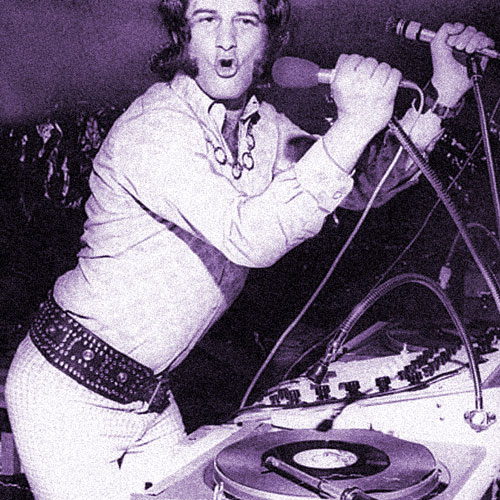
Radio Luxembourg: The Station that Changed Our Lives, Episode #1

DJ Culture

Airdate: March 3, 2026
27:03
Hosted by Magnus & Nicole

EPISODE 1: DJ Culture

Dr Dominique Santana

Selling happiness, shaping minds – a Radio Luxembourg story. The student podcast series from the University of Luxembourg.

Prof. Andreas Fickers

A series about the power of radio, DJ culture, seductive ads, global audiences and the thin line between information and propaganda.

Magnus

Welcome to our podcast about Radio Luxembourg! In this episode, we will be diving into the voices behind your parents’ or grandparents’ teenage rebellion: the DJs of Radio Luxembourg, with me Magnus and my co-host Nicole.

Jingle

Radio Luxembourg.

Broadcasting on 208 metres…

Nicole:

Now take a moment to think: what comes to your mind when you hear the word DJ? You might picture someone in sunglasses at a music festival or in a club, with a turntable or a MacBook. But during the heyday of Radio Luxembourg, the station’s disc jockeys had a major influence on people’s everyday lives.

Jingle

It’s Stars Horoscope on 208 with Tony Prince and Anne Petrie. The clairvoyant spectacular…

Magnus

Let’s travel back in time for a minute. It’s the 1930s, life is in black and white, and in the United States of America the term disc jockey – or DJ for short – is coined by radio journalist Walter Winchell to describe radio commentator Martin Block’s habit of playing recorded music live on air. Essentially, a DJ would jockey – or operate – their gramophone records – or their “discs”. At that time and for decades to come, there were no courses on how to become a DJ, no training – it was a job that you learned on the go.

Nicole

Now imagine it’s the 1950s and 60s. In countries across Europe, public service broadcasting is the norm.

And pop music? It’s barely allowed a whisper.

Enter Radio Luxembourg, broadcasting with a signal that faded in and out like a ghost in the night – but that ghost brought you rock ’n’ roll, soul, pop… and freedom.

And at the heart of that revolution were the DJs. Georges Lang from the French service, the Canadian David Kid Jensen from the English service, and Frank Elstner from the German service… These guys didn’t just spin records – they created rituals. They forged the careers of artists. They became household names.

Intermission

Little record here by Mike Batt…

Magnus

They weren’t just announcers. They were your friends. Your companions. They were style icons, sometimes even celebrity crushes. You knew their voices like you knew your favourite song. Barry Alldis had a fan club. Tony Prince got mobbed by teenagers. Kid Jensen? He was the older brother every kid wanted. People from across Europe wrote letters about their lives, because they felt like they were talking to friends. DJs were what we would call the influencers of their time, which of course also had its disadvantages. People wanted to befriend them, to date them, even to marry them. Teenagers sometimes told them their secrets and life stories – like in this letter from a fan to Tony Prince.

Archive excerpt

Dear Tony,

My name’s Sonja, though my friends call me “Bump”. (That is the translation, it’s “Guppe” in Swedish.)

They call me that, because I walk bumpy, though I actually don’t, it’s something they found up just to be able to give me a nick-name! Well, anyway I’m 16 years old and I tune into Radio Luxy almost every night. Mostly to the early shows but also to 11pm quite often. It’s a pity Sir Henry’s on so late, because I adore him.

Nicole:

DJs with cult status weren’t unique to Radio Luxembourg. The 1960s was the peak of pirate radio stations like Radio Caroline, and a lot of the DJs who were so famous for being on Radio Luxembourg also honed their craft on these boat-based radio stations. Names that your parents and grandparents will probably go crazy about, like Tony Prince, President/Emperor Rosko and Mark Wesley, were just some of the Radio Caroline DJs who jumped ship to Radio Luxembourg, bringing with them their unique and captivating personalities.

Magnus

Meanwhile, in the 1950s and the early 1960s, public service radio stations like the BBC were far more stiff, more formal. They barely played a squeak of actual pop music, and there was only so much light music that teenagers of the day could take. Radio Luxembourg was fresh, based on what listeners wanted, with DJs who spoke directly to the listeners and played music that young people wanted to hear. So it was hardly a surprise that an entire generation tuned into stations like Radio Luxembourg.

Nicole:

For some kids, especially in strict homes, the only way they had to listen to new music – pop, rock ’n’ roll – was through Radio Luxembourg.

For them – and by them, we mean your grandparents or parents, perhaps –, the shows presented by these DJs were exciting. They had a huge influence on their everyday lives – how they lived, how they felt, what they listened to… A fun game to play at the dinner table is to ask them who their favourite Radio Luxembourg DJs were. See how long they can talk about them for!

Jingle

Luxembourg, Luxembourg, Luxembourg, Rosko est là.

Magnus:

Obviously, all the DJs were scheduled in their own time slots. It wasn’t a free-for-all, just a chaotic group of DJs going on air whenever they felt like it.

Each show catered to different tastes and different ages, with different language services aimed at audiences in different countries. So while teenagers in Britain could start the weekend with a bang listening to “Friday Night with Rob Jones” and get their fill of pop with the “Disco Imports” show hosted by Benny Brown, their German counterparts would be hooked to “Die Großen Acht”, hosted by Frank Elstner and later by Axel Fitzke. There was something for everyone – Radio Luxembourg made sure of that!

Nicole:

But who was actually in charge of making the decisions at Radio Luxembourg?

We tend to assume the DJs – those charismatic frontliners, with their unforgettable voices – had full control, because they were the ones we heard. But the truth is, they didn’t. The real power sat behind the glass, in the hands of programme directors. It was these individuals – mostly men – who decided what shows aired, what music played, and which voices were heard.

And that raises a bigger question: where were the women?

If you listen back to the English-language 208 service, you’ll notice something – or rather, the absence of something. Female DJs were almost completely absent. It wasn’t because they lacked talent or interest. It’s because they rarely got the opportunity.

In the German, French and Luxembourgish services, women’s voices were much more common. Broadcasters like Aline Pütz, Helga Guitton and the young Désirée Nosbusch – now a famous actor – regularly took to the microphone. But on the English service, only a handful of women – names like Muriel Young, Honey Bee Jensen and Wendy Lloyd – ever made it on air. And they were the rare exception, not the rule.

Magnus

There’s a striking moment in an interview with a Radio Luxembourg DJ in the late 1970s or the early 1980s, when he casually says, “Women think too much about themselves, they worry too much.” It’s one of those offhand comments that says a lot about the culture at the time – the time when decision-making power, especially in the media, was overwhelmingly male.

This wasn’t unique to Radio Luxembourg. Across the industry, from the 1960s to the 1980s, hearing a woman’s voice on the radio, especially in a position of authority, was rare. That silence wasn’t accidental. It reflected a wider reality.

Nicole

So next time you hear one of those golden-era broadcasts, take a moment to step outside the box rather than being swept away by nostalgia. Whose voices were missing? And what did we lose by not hearing them?

Jingle

Radio Luxembourg.

Magnus

Radio Luxembourg also transmitted political shows, discussions of societal issues, or even the latest, juiciest celebrity gossip – especially on the French and Luxembourgish services. And who was the king of all things chat on Radio Luxembourg? One of the DJs who covered gossip and chat, among many other things, was another former Radio Caroline DJ, Emperor Rosko – known as President Rosko when he was on the French service. Here he is in 1988.

Jingle

Luxembourg leads the way.

Archive

your way right now!

Rosko: Time for some Hollywood sleaze and tease. Are you ready for the latest gossip? It’s coming

Nicole

Obviously, no show was without its jingle. Some jingles were associated with specific shows, some with adverts or Radio Luxembourg more generally, but every DJ had their own jingle, their own introduction. The moment you heard those jingles, you’d jump out of your seat in excitement, knowing that it was your favourite DJ, your favourite show, your favourite part of the day coming up next – or you’d rush to switch off because, for whatever reason, you just really didn’t like the DJ that was about to come on.

Magnus

These jingles – the backing vocals, the bass line – were the sounds that built up the tension for the performance of the DJs themselves. Their shows were seen as prime air space for commercials – people paid a lot of money to promote their products while a certain DJ was on air and audience numbers were high. To find out more about the power of jingles, listen to the episode “Jingle Sells”, which is all about advertisements, via our podcast page at radio.lu.

Jingle

Radio Luxembourg. Mark Wesley.

Nicole

As you’ve just heard in the example with Mark Wesley, these jingles captivated people’s imagination and grabbed their attention. Picture, if you will, a modern-day DJ in a club, making sure everyone is having a good time. The concept of the party-ruling, stage-owning performer isn’t something that started recently. It actually goes all the way back to the 1940s and 1950s.

For instance, one of the biggest names from Radio Luxembourg, Tony Prince, introduced the Beatles in a club in Oldham, England, in 1963 after their song From Me to You became a number one hit.

Apparently that night John Lennon had all but destroyed his vocal chords, but he powered through.

Magnus

Not many of us who live here in Luxembourg know this, but some of the Radio Luxembourg DJs performed at clubs here in Luxembourg, and there was a big clubbing scene in the 1960s, 70s and 80s.

Have you ever heard of the club called the Blow Up, on the Glacis in Luxembourg City? Today it’s called “Gotham”. The Blow Up was a venue where Queen and many others performed. Some of the DJs played and partied there after their shifts on Radio Luxembourg, and some bands even started tours there. There is a whole clubbing history in Luxembourg that we don’t know about – and who was at the heart of it? It was the DJs!

Interview

Tony Prince: At the Blow-Up, they used to have a lot of the groups that were going to be big-time like Queen and Steve Harley & Cockney Rebel and Thin Lizzy, it was just a magic time here in the early ‘70s when Luxembourg, Radio Luxembourg, was the voice of Europe without a doubt.

Jingle

The rhythm of nightlife in Great Britain.

Archive

Tony Prince: Hey, good evening everybody, this is your Royal Ruler Tony Prince. Radio Luxembourg.

Nicole

You just heard a clip of Tony Prince, or the “Royal Ruler”, as he was also known. He founded Mixmag– a DJ magazine which is still going to this day – and its companion service DMC (Disco Mix Club), where, for a monthly fee, DJs would get monthly mixes that they could play on stage and at clubs. So the Royal Ruler not only ruled the airwaves – he also helped loads of other DJs make a name and earn a living outside the radio stations.

Magnus

Don’t forget, though, Tony Prince is just one name among many talented and influential DJs from our “Station of the Stars”.

A lot of people will remember “2-0-8”, the English service, but a lot of prominent DJs came through the ranks of the French, the German and the Luxembourgish services: Frank Elstner was a huge name in the German service, and the famous Luxembourgish actress Désirée Nosbusch also had a stint on Radio Luxembourg’s German service, starting at the age of 12! President Rosko was hugely influential on the French service, bringing his own sound system to make his shows flow better. And who can forget Zappy Max from the French service in the 1950s and the 1960s?

Nicole

Some of the DJs were also Luxembourgers, like Camillo Felgen. From translating Beatles songs into German to presenting the very first “Hitparade” for Radio Luxembourg in 1958, Felgen was not just a DJ; he was also the first person to represent Luxembourg at the Eurovision Song Contest in 1962. Here he is ending the first “Hitparade” show on Radio Luxembourg.

Archive

Camillo Felgen: Und damit wären wir am Ende unserer ersten Hitparade. Sie liebe Hörer sollen

bestimmen welche unter…

Magnus

Seeing as the DJs were so popular, inspiring imagined friendships and celebrity crushes for an entire generation of listeners, it’s not surprising that some of them had their own fan clubs.

And they invariably received tons, and I mean TONS, of letters from fans all around the world. Ordinary people wrote to them to tell them stories, tell them about themselves and their friends, or to thank them for playing that new hit by the Rolling Stones. From the United States to Norway, from West Germany to Sweden, it was a way for the audience to get in touch with the DJs and for the DJs to connect with their audience.

Nicole:

Already at that time, DJs weren’t just the voices of the radio – many had become the faces of it too.

Pictures of them graced magazines like Fab 208, which featured pull-out posters for readers to hang on their bedroom walls – and throw darts at if they didn’t play their favourite song. Check out our website radio.lu to see some pictures of the DJs’ glamorous looks.

Magnus

We do need to take a step back and ask some questions, however. Is it healthy for someone to have such influence and power over such a huge audience? This is not something that is unique to the DJs of Radio Luxembourg – just think of stardom today, and how much power some individuals have over so many impressionable people.

Nicole:

That’s something for you, for me, for all of us to think about. How much influence is actually too much?

How much power may be too much for one person?

With great power comes great responsibility, and unfortunately not everyone uses their power responsibly.

Magnus

The best-known example is probably Jimmy Savile, who took advantage of his power and influence to prey on young boys and girls from the mid-1940s until his death in 2011. Savile was at Radio Luxembourg for 10 years, and he spent many years at the BBC too. What he did serves as a reminder of how many people can suffer when someone abuses the power and influence that they have.

It’s also important to realise that Savile’s actions had a knock-on impact on other DJs from that time, as is perhaps best summarised by President Rosko when talking about his association with BBC Radio

Archive/Interview

Rosko: The Radio 1 name was really bad for a while when the Jimmy Savile thing kicked off and then DLT [Dave Lee Travis] followed it up and a couple of other ones and… There was a time I didn’t want to say I was from Radio 1, because they would look at you sideways, you know?

Magnus

Others, like Tony Prince, had a different view on the influence they had.

Interview

Interviewer: Were you conscious of the power you had at that point?

Tony Prince: I don’t know whether it was power. I felt a great influence, I felt a great… I felt… there was a sense of doing a great service to the teenagers at the time, because I remembered when I was a kid, listening to Luxembourg under the pillow, when I wasn’t supposed to, and I knew there were millions of kids doing exactly the same, you know, going to bed, taking the tranny [transistor radio] under the pillow, and I was aware that I was very important in their life – not me as a person but what I was doing, playing music to them, giving them that light refreshment. And then you’d go out and do a gig and you’d meet them and they’d scream at you like you are one of the Beatles, you know, but it was only because you’d made them feel good to be alive, you know.

Intermission

Tony Prince: Well good afternoon everybody, this is your Royal Ruler Tony Prince.

Nicole

When they toured (yes, DJs toured with live shows, just as pop stars toured with songs), people would go crazy – they would crowd into airports to catch a glimpse of their idols. This is really the part that makes any fame questionable. Why do we tend to idealise some people and put them on such a pedestal?

How is it that certain individuals can provoke such an extreme reaction among their fans?

Magnus

Of course, when we think about it, their shows were special, and what made them special was the fact that it felt like they were speaking to you and me, individually. It was intimate. The DJs would picture the audience sitting in front of them as they worked their magic and did their show. This is what made it feel and sound so authentic – it was as if Benny Brown, President Rosko or Frank Elstner were actually sitting in your living room talking to you! And remember that at the time there were no courses you could take to learn how to be a DJ or a broadcaster. They were simply naturals at it, and they used their character to reach out to the audience.

Jingle

celui …

C’est Mini-Max. Minimum de bla-bla, maximum de musique. Avec le Président Rosko, le plus beau,

Nicole

Some DJs didn’t just stick to DJing, though. Tony Prince, who founded DMC and Mixmag, became a programme director at Radio Luxembourg from 1977 to 1984, exerting his own influence over the station’s output – and over what millions of people heard on the radio.

Magnus

To hear more about the power of entertainment on Radio Luxembourg, listen to our episode about power, “A Radio Born Powerful”, which is up next.

Archive/Intermission

Hier sind sie, die Großen Acht von RTL.

Am Mikrofon begrüßt Sie auch heute…

Nicole

Today, we like to think we control our own playlists – on Spotify, Apple Music, YouTube and all the other platforms where we listen to music. And in many ways, we do. But it’s easy to forget the quiet power of algorithms working behind the scenes.

Back in the golden age of Radio Luxembourg, the DJs and programme directors were the algorithm.

They decided what made it onto the airwaves and what didn’t.

With nearly 100 million listeners, they didn’t just provide music – they shaped culture. DJ-curated playlists sparked music trends, influenced fashion, and even carried political weight.

Take President/Emperor Rosko – his French broadcasts, along with live reports from the streets of Paris during the May ’68 riots, turned Radio Luxembourg into more than entertainment; it became a kind of barricade in broadcast form. These weren’t accidental choices – they were cultural engineering.

In an era before streaming, these voices were what decided which songs became hits, which artists succeeded, and what society listened to, talked about and ultimately remembered.

Magnus

For a long time, Radio Luxembourg was the home of music – it was where people tuned in to listen to the newest and best songs. For example, Love Me Do was the first ever Beatles song to be aired on radio. And as you’re about to hear, Radio Luxembourg was key to advertising the singles and albums of some of the biggest artists all over the world.

Archive/Advertisement

Add some music to your day – a musical offering from the Beach Boys, and it’s from their new album “Sunflower”.

Nicole

DJs were close to the musicians too – they were not just familiar voices for listeners; they were often friends of artists. This intimacy opened many doors for them… They would go out with bands touring Luxembourg, hang out in restaurants or pubs, share stories – all under the radar because Radio Luxembourg, in its own country, did not garner a huge amount of attention. That anonymity gave them genuine access and credibility with artists – not as trophy presenters interviewing stars, but as trusted friends.

Magnus

Kid Jensen told a wonderful anecdote which illustrates this:

“I was in the back seat of a car in Luxembourg one day on the way to a club, and David Bowie was sitting beside me. He said to me, ‘You know I’m bi, right?’ I said, ‘What, bicycle?’, and he laughed.”

These kinds of stories show just how close the DJs were to the artists.

Nicole

In many ways we can say that they brought these bands here to Luxembourg. Many big bands played at Villa Louvigny, including both the Beach Boys and the Grateful Dead in May 1972 alone. Villa Louvigny is an unassuming building in the park in the centre of Luxembourg City. It is a legendary spot, hidden in plain sight, that many of us may pass by every day without even realising that such huge artists performed there in the 70s. There are some really cool photos of these performances on our website – go and check them out!

Archive/Intermission

Right now we’re talking to Mike Love. It’s been a while since you guys have been over to Europe.

What’s been going on, so we can let the folks listening here on Radio Luxembourg know?

Magnus

Did you know that some of Radio Luxembourg’s DJs actually lived here in the country?

Although the English‑service DJs behind the famed “208” broadcasts were household names across the UK, Ireland and most of Europe, in Luxembourg they could walk the streets completely under the radar.

Compare that to someone like Camillo Felgen, the Luxembourgish DJ and TV presenter who did get recognised locally. The 208 DJs were different – while they might have been superstars abroad, they were “nobodies”, so to speak, in Luxembourg, moving through local clubs, shops and studios without fanfare. If they did the same in London, they would be chased by crowds.

Nicole

The fame they experienced in London didn’t spark a frenzy here – it stayed in the UK. So what was life in Luxembourg like for them?

They were a close-knit family of DJs, living quiet lives, their fame hidden away behind an international broadcast which meant that they never fully gained local celebrity status. It was a peculiar variety of offshore fame, heard far and wide but rarely seen on the streets of Luxembourg.

Magnus

Speaking of life in Luxembourg, Mark Wesley actually met his wife here while he was working as a DJ for Radio Luxembourg. And there’s also this funny anecdote where he says that Queen – the band, not Queen Elizabeth! – even came to see him once in his apartment! Again, this really shows how close the

DJs were to the artists.

Jingle

Radio Luxembourg

Nicole

The Radio Luxembourg DJs were part of listeners’ lives, and when you ask yourself now what it meant to be a DJ, remember this. They were more than just the voices of Radio Luxembourg. They were the faces of it, the masters of ceremony – although they weren’t the conductors of the orchestra. They were perhaps the star performers, influencing and entertaining people all over the world with shows about music, everyday life, celebrity gossip, and everything in between.

Magnus

People like President Rosko, the Royal Ruler, Frank Elstner and co. were friends to the audience and artists alike. They were as loved by you as they were by the likes of Paul McCartney and Brian May.

The music they played, the songs they immortalised and the jingles that rode the waves with them touched a whole generation of people. Their voices, their jingles, their humour, their charisma – it was all a weekly, even a daily part of people’s lives.

Nicole

And while the heyday of these DJs and of Radio Luxembourg may be over, their legacy and their influence live on today. Books by and about them are still being published, their recordings echo across archives and playlists, and even what you’re listening to now, this podcast, is living proof that, all these years later, their voices, their charisma and their cultural impact continue to resonate through time.

Hopefully their stories will inspire some of you to delve further into the art of DJing.

Magnus

In the meantime, make sure you check out our next episode, which talks about the power of Radio Luxembourg and the power of entertainment. But for now it’s goodbye from me, Magnus.

Nicole

And from me, Nicole. Thank you very much for listening.

Both:

Goodbye.

Outro

C2DH: Innovating & Sharing History.

In this episode, we’re diving into the voices behind your parents’ or your grandparents' teenage rebellion: the DJs of Radio Luxembourg.

Episode Playlist

Full Transcript

EPISODE 1: DJ Culture

Dr Dominique Santana

Selling happiness, shaping minds – a Radio Luxembourg story. The student podcast series from the University of Luxembourg.

Prof. Andreas Fickers

A series about the power of radio, DJ culture, seductive ads, global audiences and the thin line between information and propaganda.

Magnus

Welcome to our podcast about Radio Luxembourg! In this episode, we will be diving into the voices behind your parents’ or grandparents’ teenage rebellion: the DJs of Radio Luxembourg, with me Magnus and my co-host Nicole.

Jingle

Radio Luxembourg.

Broadcasting on 208 metres…

Nicole:

Now take a moment to think: what comes to your mind when you hear the word DJ? You might picture someone in sunglasses at a music festival or in a club, with a turntable or a MacBook. But during the heyday of Radio Luxembourg, the station’s disc jockeys had a major influence on people’s everyday lives.

Jingle

It’s Stars Horoscope on 208 with Tony Prince and Anne Petrie. The clairvoyant spectacular…

Magnus

Let’s travel back in time for a minute. It’s the 1930s, life is in black and white, and in the United States of America the term disc jockey – or DJ for short – is coined by radio journalist Walter Winchell to describe radio commentator Martin Block’s habit of playing recorded music live on air. Essentially, a DJ would jockey – or operate – their gramophone records – or their “discs”. At that time and for decades to come, there were no courses on how to become a DJ, no training – it was a job that you learned on the go.

Nicole

Now imagine it’s the 1950s and 60s. In countries across Europe, public service broadcasting is the norm.

And pop music? It’s barely allowed a whisper.

Enter Radio Luxembourg, broadcasting with a signal that faded in and out like a ghost in the night – but that ghost brought you rock ’n’ roll, soul, pop… and freedom.

And at the heart of that revolution were the DJs. Georges Lang from the French service, the Canadian David Kid Jensen from the English service, and Frank Elstner from the German service… These guys didn’t just spin records – they created rituals. They forged the careers of artists. They became household names.

Intermission

Little record here by Mike Batt…

Magnus

They weren’t just announcers. They were your friends. Your companions. They were style icons, sometimes even celebrity crushes. You knew their voices like you knew your favourite song. Barry Alldis had a fan club. Tony Prince got mobbed by teenagers. Kid Jensen? He was the older brother every kid wanted. People from across Europe wrote letters about their lives, because they felt like they were talking to friends. DJs were what we would call the influencers of their time, which of course also had its disadvantages. People wanted to befriend them, to date them, even to marry them. Teenagers sometimes told them their secrets and life stories – like in this letter from a fan to Tony Prince.

Archive excerpt

Dear Tony,

My name’s Sonja, though my friends call me “Bump”. (That is the translation, it’s “Guppe” in Swedish.)

They call me that, because I walk bumpy, though I actually don’t, it’s something they found up just to be able to give me a nick-name! Well, anyway I’m 16 years old and I tune into Radio Luxy almost every night. Mostly to the early shows but also to 11pm quite often. It’s a pity Sir Henry’s on so late, because I adore him.

Nicole:

DJs with cult status weren’t unique to Radio Luxembourg. The 1960s was the peak of pirate radio stations like Radio Caroline, and a lot of the DJs who were so famous for being on Radio Luxembourg also honed their craft on these boat-based radio stations. Names that your parents and grandparents will probably go crazy about, like Tony Prince, President/Emperor Rosko and Mark Wesley, were just some of the Radio Caroline DJs who jumped ship to Radio Luxembourg, bringing with them their unique and captivating personalities.

Magnus

Meanwhile, in the 1950s and the early 1960s, public service radio stations like the BBC were far more stiff, more formal. They barely played a squeak of actual pop music, and there was only so much light music that teenagers of the day could take. Radio Luxembourg was fresh, based on what listeners wanted, with DJs who spoke directly to the listeners and played music that young people wanted to hear. So it was hardly a surprise that an entire generation tuned into stations like Radio Luxembourg.

Nicole:

For some kids, especially in strict homes, the only way they had to listen to new music – pop, rock ’n’ roll – was through Radio Luxembourg.

For them – and by them, we mean your grandparents or parents, perhaps –, the shows presented by these DJs were exciting. They had a huge influence on their everyday lives – how they lived, how they felt, what they listened to… A fun game to play at the dinner table is to ask them who their favourite Radio Luxembourg DJs were. See how long they can talk about them for!

Jingle

Luxembourg, Luxembourg, Luxembourg, Rosko est là.

Magnus:

Obviously, all the DJs were scheduled in their own time slots. It wasn’t a free-for-all, just a chaotic group of DJs going on air whenever they felt like it.

Each show catered to different tastes and different ages, with different language services aimed at audiences in different countries. So while teenagers in Britain could start the weekend with a bang listening to “Friday Night with Rob Jones” and get their fill of pop with the “Disco Imports” show hosted by Benny Brown, their German counterparts would be hooked to “Die Großen Acht”, hosted by Frank Elstner and later by Axel Fitzke. There was something for everyone – Radio Luxembourg made sure of that!

Nicole:

But who was actually in charge of making the decisions at Radio Luxembourg?

We tend to assume the DJs – those charismatic frontliners, with their unforgettable voices – had full control, because they were the ones we heard. But the truth is, they didn’t. The real power sat behind the glass, in the hands of programme directors. It was these individuals – mostly men – who decided what shows aired, what music played, and which voices were heard.

And that raises a bigger question: where were the women?

If you listen back to the English-language 208 service, you’ll notice something – or rather, the absence of something. Female DJs were almost completely absent. It wasn’t because they lacked talent or interest. It’s because they rarely got the opportunity.

In the German, French and Luxembourgish services, women’s voices were much more common. Broadcasters like Aline Pütz, Helga Guitton and the young Désirée Nosbusch – now a famous actor – regularly took to the microphone. But on the English service, only a handful of women – names like Muriel Young, Honey Bee Jensen and Wendy Lloyd – ever made it on air. And they were the rare exception, not the rule.

Magnus

There’s a striking moment in an interview with a Radio Luxembourg DJ in the late 1970s or the early 1980s, when he casually says, “Women think too much about themselves, they worry too much.” It’s one of those offhand comments that says a lot about the culture at the time – the time when decision-making power, especially in the media, was overwhelmingly male.

This wasn’t unique to Radio Luxembourg. Across the industry, from the 1960s to the 1980s, hearing a woman’s voice on the radio, especially in a position of authority, was rare. That silence wasn’t accidental. It reflected a wider reality.

Nicole

So next time you hear one of those golden-era broadcasts, take a moment to step outside the box rather than being swept away by nostalgia. Whose voices were missing? And what did we lose by not hearing them?

Jingle

Radio Luxembourg.

Magnus

Radio Luxembourg also transmitted political shows, discussions of societal issues, or even the latest, juiciest celebrity gossip – especially on the French and Luxembourgish services. And who was the king of all things chat on Radio Luxembourg? One of the DJs who covered gossip and chat, among many other things, was another former Radio Caroline DJ, Emperor Rosko – known as President Rosko when he was on the French service. Here he is in 1988.

Jingle

Luxembourg leads the way.

Archive

your way right now!

Rosko: Time for some Hollywood sleaze and tease. Are you ready for the latest gossip? It’s coming

Nicole

Obviously, no show was without its jingle. Some jingles were associated with specific shows, some with adverts or Radio Luxembourg more generally, but every DJ had their own jingle, their own introduction. The moment you heard those jingles, you’d jump out of your seat in excitement, knowing that it was your favourite DJ, your favourite show, your favourite part of the day coming up next – or you’d rush to switch off because, for whatever reason, you just really didn’t like the DJ that was about to come on.

Magnus

These jingles – the backing vocals, the bass line – were the sounds that built up the tension for the performance of the DJs themselves. Their shows were seen as prime air space for commercials – people paid a lot of money to promote their products while a certain DJ was on air and audience numbers were high. To find out more about the power of jingles, listen to the episode “Jingle Sells”, which is all about advertisements, via our podcast page at radio.lu.

Jingle

Radio Luxembourg. Mark Wesley.

Nicole

As you’ve just heard in the example with Mark Wesley, these jingles captivated people’s imagination and grabbed their attention. Picture, if you will, a modern-day DJ in a club, making sure everyone is having a good time. The concept of the party-ruling, stage-owning performer isn’t something that started recently. It actually goes all the way back to the 1940s and 1950s.

For instance, one of the biggest names from Radio Luxembourg, Tony Prince, introduced the Beatles in a club in Oldham, England, in 1963 after their song From Me to You became a number one hit.

Apparently that night John Lennon had all but destroyed his vocal chords, but he powered through.

Magnus

Not many of us who live here in Luxembourg know this, but some of the Radio Luxembourg DJs performed at clubs here in Luxembourg, and there was a big clubbing scene in the 1960s, 70s and 80s.

Have you ever heard of the club called the Blow Up, on the Glacis in Luxembourg City? Today it’s called “Gotham”. The Blow Up was a venue where Queen and many others performed. Some of the DJs played and partied there after their shifts on Radio Luxembourg, and some bands even started tours there. There is a whole clubbing history in Luxembourg that we don’t know about – and who was at the heart of it? It was the DJs!

Interview

Tony Prince: At the Blow-Up, they used to have a lot of the groups that were going to be big-time like Queen and Steve Harley & Cockney Rebel and Thin Lizzy, it was just a magic time here in the early ‘70s when Luxembourg, Radio Luxembourg, was the voice of Europe without a doubt.

Jingle

The rhythm of nightlife in Great Britain.

Archive

Tony Prince: Hey, good evening everybody, this is your Royal Ruler Tony Prince. Radio Luxembourg.

Nicole

You just heard a clip of Tony Prince, or the “Royal Ruler”, as he was also known. He founded Mixmag– a DJ magazine which is still going to this day – and its companion service DMC (Disco Mix Club), where, for a monthly fee, DJs would get monthly mixes that they could play on stage and at clubs. So the Royal Ruler not only ruled the airwaves – he also helped loads of other DJs make a name and earn a living outside the radio stations.

Magnus

Don’t forget, though, Tony Prince is just one name among many talented and influential DJs from our “Station of the Stars”.

A lot of people will remember “2-0-8”, the English service, but a lot of prominent DJs came through the ranks of the French, the German and the Luxembourgish services: Frank Elstner was a huge name in the German service, and the famous Luxembourgish actress Désirée Nosbusch also had a stint on Radio Luxembourg’s German service, starting at the age of 12! President Rosko was hugely influential on the French service, bringing his own sound system to make his shows flow better. And who can forget Zappy Max from the French service in the 1950s and the 1960s?

Nicole

Some of the DJs were also Luxembourgers, like Camillo Felgen. From translating Beatles songs into German to presenting the very first “Hitparade” for Radio Luxembourg in 1958, Felgen was not just a DJ; he was also the first person to represent Luxembourg at the Eurovision Song Contest in 1962. Here he is ending the first “Hitparade” show on Radio Luxembourg.

Archive

Camillo Felgen: Und damit wären wir am Ende unserer ersten Hitparade. Sie liebe Hörer sollen

bestimmen welche unter…

Magnus

Seeing as the DJs were so popular, inspiring imagined friendships and celebrity crushes for an entire generation of listeners, it’s not surprising that some of them had their own fan clubs.

And they invariably received tons, and I mean TONS, of letters from fans all around the world. Ordinary people wrote to them to tell them stories, tell them about themselves and their friends, or to thank them for playing that new hit by the Rolling Stones. From the United States to Norway, from West Germany to Sweden, it was a way for the audience to get in touch with the DJs and for the DJs to connect with their audience.

Nicole:

Already at that time, DJs weren’t just the voices of the radio – many had become the faces of it too.

Pictures of them graced magazines like Fab 208, which featured pull-out posters for readers to hang on their bedroom walls – and throw darts at if they didn’t play their favourite song. Check out our website radio.lu to see some pictures of the DJs’ glamorous looks.

Magnus

We do need to take a step back and ask some questions, however. Is it healthy for someone to have such influence and power over such a huge audience? This is not something that is unique to the DJs of Radio Luxembourg – just think of stardom today, and how much power some individuals have over so many impressionable people.

Nicole:

That’s something for you, for me, for all of us to think about. How much influence is actually too much?

How much power may be too much for one person?

With great power comes great responsibility, and unfortunately not everyone uses their power responsibly.

Magnus

The best-known example is probably Jimmy Savile, who took advantage of his power and influence to prey on young boys and girls from the mid-1940s until his death in 2011. Savile was at Radio Luxembourg for 10 years, and he spent many years at the BBC too. What he did serves as a reminder of how many people can suffer when someone abuses the power and influence that they have.

It’s also important to realise that Savile’s actions had a knock-on impact on other DJs from that time, as is perhaps best summarised by President Rosko when talking about his association with BBC Radio

Archive/Interview

Rosko: The Radio 1 name was really bad for a while when the Jimmy Savile thing kicked off and then DLT [Dave Lee Travis] followed it up and a couple of other ones and… There was a time I didn’t want to say I was from Radio 1, because they would look at you sideways, you know?

Magnus

Others, like Tony Prince, had a different view on the influence they had.

Interview

Interviewer: Were you conscious of the power you had at that point?

Tony Prince: I don’t know whether it was power. I felt a great influence, I felt a great… I felt… there was a sense of doing a great service to the teenagers at the time, because I remembered when I was a kid, listening to Luxembourg under the pillow, when I wasn’t supposed to, and I knew there were millions of kids doing exactly the same, you know, going to bed, taking the tranny [transistor radio] under the pillow, and I was aware that I was very important in their life – not me as a person but what I was doing, playing music to them, giving them that light refreshment. And then you’d go out and do a gig and you’d meet them and they’d scream at you like you are one of the Beatles, you know, but it was only because you’d made them feel good to be alive, you know.

Intermission

Tony Prince: Well good afternoon everybody, this is your Royal Ruler Tony Prince.

Nicole

When they toured (yes, DJs toured with live shows, just as pop stars toured with songs), people would go crazy – they would crowd into airports to catch a glimpse of their idols. This is really the part that makes any fame questionable. Why do we tend to idealise some people and put them on such a pedestal?

How is it that certain individuals can provoke such an extreme reaction among their fans?

Magnus

Of course, when we think about it, their shows were special, and what made them special was the fact that it felt like they were speaking to you and me, individually. It was intimate. The DJs would picture the audience sitting in front of them as they worked their magic and did their show. This is what made it feel and sound so authentic – it was as if Benny Brown, President Rosko or Frank Elstner were actually sitting in your living room talking to you! And remember that at the time there were no courses you could take to learn how to be a DJ or a broadcaster. They were simply naturals at it, and they used their character to reach out to the audience.

Jingle

celui …

C’est Mini-Max. Minimum de bla-bla, maximum de musique. Avec le Président Rosko, le plus beau,

Nicole

Some DJs didn’t just stick to DJing, though. Tony Prince, who founded DMC and Mixmag, became a programme director at Radio Luxembourg from 1977 to 1984, exerting his own influence over the station’s output – and over what millions of people heard on the radio.

Magnus

To hear more about the power of entertainment on Radio Luxembourg, listen to our episode about power, “A Radio Born Powerful”, which is up next.

Archive/Intermission

Hier sind sie, die Großen Acht von RTL.

Am Mikrofon begrüßt Sie auch heute…

Nicole

Today, we like to think we control our own playlists – on Spotify, Apple Music, YouTube and all the other platforms where we listen to music. And in many ways, we do. But it’s easy to forget the quiet power of algorithms working behind the scenes.

Back in the golden age of Radio Luxembourg, the DJs and programme directors were the algorithm.

They decided what made it onto the airwaves and what didn’t.

With nearly 100 million listeners, they didn’t just provide music – they shaped culture. DJ-curated playlists sparked music trends, influenced fashion, and even carried political weight.

Take President/Emperor Rosko – his French broadcasts, along with live reports from the streets of Paris during the May ’68 riots, turned Radio Luxembourg into more than entertainment; it became a kind of barricade in broadcast form. These weren’t accidental choices – they were cultural engineering.

In an era before streaming, these voices were what decided which songs became hits, which artists succeeded, and what society listened to, talked about and ultimately remembered.

Magnus

For a long time, Radio Luxembourg was the home of music – it was where people tuned in to listen to the newest and best songs. For example, Love Me Do was the first ever Beatles song to be aired on radio. And as you’re about to hear, Radio Luxembourg was key to advertising the singles and albums of some of the biggest artists all over the world.

Archive/Advertisement

Add some music to your day – a musical offering from the Beach Boys, and it’s from their new album “Sunflower”.

Nicole

DJs were close to the musicians too – they were not just familiar voices for listeners; they were often friends of artists. This intimacy opened many doors for them… They would go out with bands touring Luxembourg, hang out in restaurants or pubs, share stories – all under the radar because Radio Luxembourg, in its own country, did not garner a huge amount of attention. That anonymity gave them genuine access and credibility with artists – not as trophy presenters interviewing stars, but as trusted friends.

Magnus

Kid Jensen told a wonderful anecdote which illustrates this:

“I was in the back seat of a car in Luxembourg one day on the way to a club, and David Bowie was sitting beside me. He said to me, ‘You know I’m bi, right?’ I said, ‘What, bicycle?’, and he laughed.”

These kinds of stories show just how close the DJs were to the artists.

Nicole

In many ways we can say that they brought these bands here to Luxembourg. Many big bands played at Villa Louvigny, including both the Beach Boys and the Grateful Dead in May 1972 alone. Villa Louvigny is an unassuming building in the park in the centre of Luxembourg City. It is a legendary spot, hidden in plain sight, that many of us may pass by every day without even realising that such huge artists performed there in the 70s. There are some really cool photos of these performances on our website – go and check them out!

Archive/Intermission

Right now we’re talking to Mike Love. It’s been a while since you guys have been over to Europe.

What’s been going on, so we can let the folks listening here on Radio Luxembourg know?

Magnus

Did you know that some of Radio Luxembourg’s DJs actually lived here in the country?

Although the English‑service DJs behind the famed “208” broadcasts were household names across the UK, Ireland and most of Europe, in Luxembourg they could walk the streets completely under the radar.

Compare that to someone like Camillo Felgen, the Luxembourgish DJ and TV presenter who did get recognised locally. The 208 DJs were different – while they might have been superstars abroad, they were “nobodies”, so to speak, in Luxembourg, moving through local clubs, shops and studios without fanfare. If they did the same in London, they would be chased by crowds.

Nicole

The fame they experienced in London didn’t spark a frenzy here – it stayed in the UK. So what was life in Luxembourg like for them?

They were a close-knit family of DJs, living quiet lives, their fame hidden away behind an international broadcast which meant that they never fully gained local celebrity status. It was a peculiar variety of offshore fame, heard far and wide but rarely seen on the streets of Luxembourg.

Magnus

Speaking of life in Luxembourg, Mark Wesley actually met his wife here while he was working as a DJ for Radio Luxembourg. And there’s also this funny anecdote where he says that Queen – the band, not Queen Elizabeth! – even came to see him once in his apartment! Again, this really shows how close the

DJs were to the artists.

Jingle

Radio Luxembourg

Nicole

The Radio Luxembourg DJs were part of listeners’ lives, and when you ask yourself now what it meant to be a DJ, remember this. They were more than just the voices of Radio Luxembourg. They were the faces of it, the masters of ceremony – although they weren’t the conductors of the orchestra. They were perhaps the star performers, influencing and entertaining people all over the world with shows about music, everyday life, celebrity gossip, and everything in between.

Magnus

People like President Rosko, the Royal Ruler, Frank Elstner and co. were friends to the audience and artists alike. They were as loved by you as they were by the likes of Paul McCartney and Brian May.

The music they played, the songs they immortalised and the jingles that rode the waves with them touched a whole generation of people. Their voices, their jingles, their humour, their charisma – it was all a weekly, even a daily part of people’s lives.

Nicole

And while the heyday of these DJs and of Radio Luxembourg may be over, their legacy and their influence live on today. Books by and about them are still being published, their recordings echo across archives and playlists, and even what you’re listening to now, this podcast, is living proof that, all these years later, their voices, their charisma and their cultural impact continue to resonate through time.

Hopefully their stories will inspire some of you to delve further into the art of DJing.

Magnus

In the meantime, make sure you check out our next episode, which talks about the power of Radio Luxembourg and the power of entertainment. But for now it’s goodbye from me, Magnus.

Nicole

And from me, Nicole. Thank you very much for listening.

Both:

Goodbye.

Outro

C2DH: Innovating & Sharing History.